
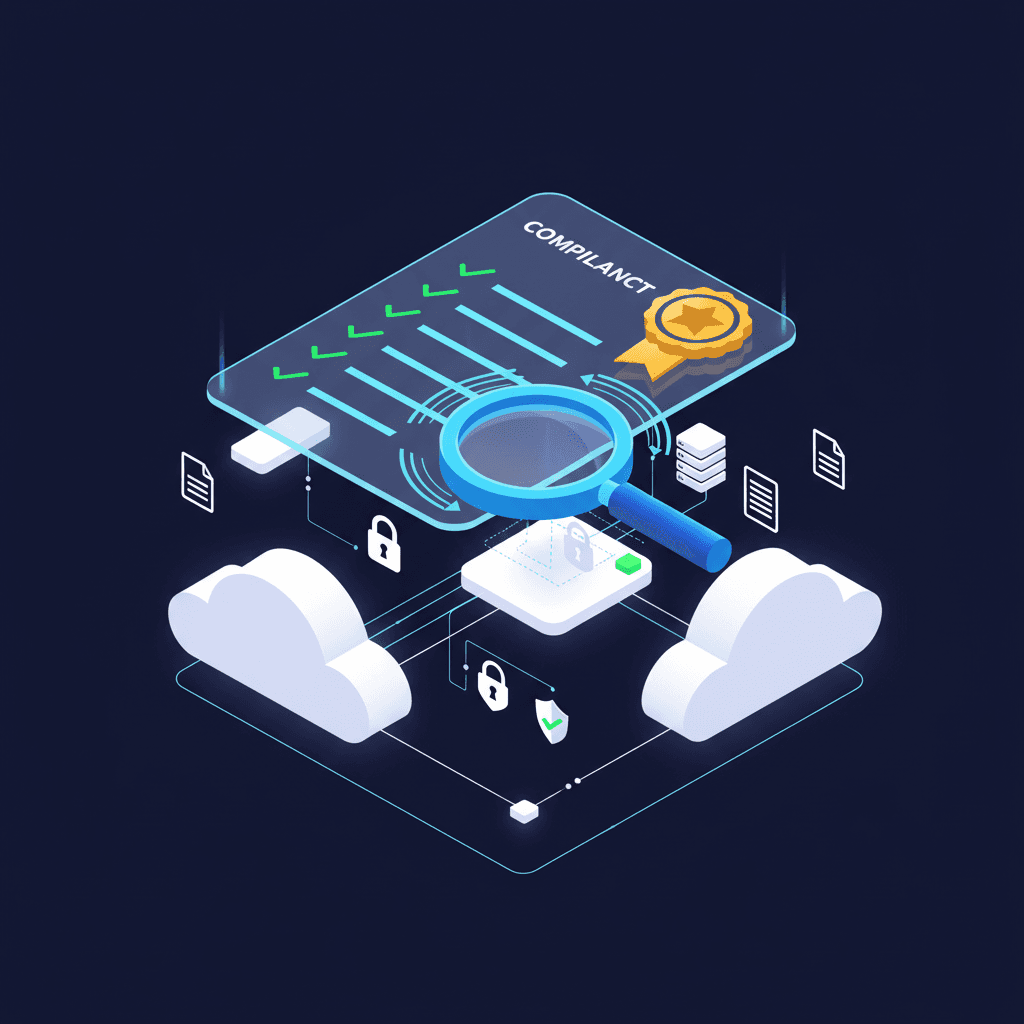
SOC 2 Type II has become the de facto standard for demonstrating security posture to enterprise customers. If you're a SaaS company, managed service provider, or any organization handling customer data, a SOC 2 Type II report is no longer optional. It's a prerequisite for closing deals.
But there's a significant gap between understanding that you need SOC 2 and understanding what auditors actually evaluate. Too many organizations treat it as a checkbox exercise, scrambling to document controls weeks before the audit period begins. This guide covers what auditors look for, where organizations commonly fail, and how to build a program that passes audits without heroic last-minute efforts.
Type I vs. Type II: The Critical Difference
SOC 2 Type I evaluates whether your controls are designed appropriately at a specific point in time. It's a snapshot: "as of December 31, 2024, these controls existed."
SOC 2 Type II evaluates whether your controls operated effectively over a period of time, typically 6–12 months. It's a movie, not a photograph. Auditors review evidence from across the entire audit period to verify that controls weren't just documented but consistently followed.
Type II is what enterprise customers care about. Type I might get you through an initial sales cycle, but sophisticated buyers will require Type II for contract renewal.
The Five Trust Service Criteria
SOC 2 is organized around five Trust Service Criteria (TSC). Security is mandatory; the others are selected based on your business and customer commitments.
1. Security (Required)
The foundational criterion covering protection against unauthorized access. This encompasses:
- Access controls: How do you manage user provisioning, deprovisioning, and access reviews? Auditors want evidence that terminated employees lose access within 24 hours and that access reviews happen quarterly.
- Network security: Firewalls, intrusion detection, network segmentation. Configuration evidence and change logs are reviewed.
- Change management: How do code changes move from development to production? Auditors look for separation of duties, meaning the developer who writes the code should not be the person who deploys it.
- Incident response: Is there a documented IR plan? Has it been tested? Auditors want to see tabletop exercises or actual incident reports demonstrating the plan works.
2. Availability
Your systems are available as committed in service level agreements (SLAs). Auditors examine:
- Uptime monitoring and historical availability metrics
- Disaster recovery plans and evidence of testing
- Capacity planning processes
- Incident documentation for any downtime events
3. Processing Integrity
Data processing is complete, valid, accurate, and timely. Particularly relevant for financial platforms, payment processors, and data analytics companies.
4. Confidentiality
Confidential information is protected throughout its lifecycle. This includes data classification schemes, encryption practices (at rest and in transit), and data retention and disposal policies.
5. Privacy
Personal information is collected, used, retained, and disposed of in accordance with privacy commitments. Often relevant when handling PII or operating in regulated industries.
What Auditors Actually Examine
Evidence, Not Intentions
The most common mistake organizations make is conflating policy with practice. Auditors don't care that your access review policy says reviews happen quarterly. They want to see the actual review artifacts from Q1, Q2, Q3, and Q4 of the audit period.
For every control, auditors typically request:
- Policy documentation: The written policy describing what should happen
- Process evidence: Screenshots, logs, or records showing what actually happened
- Population and sampling: For high-volume controls (e.g., code reviews), auditors select a sample and verify each instance
Common Evidence Requests
Access Management:
- New hire provisioning tickets with approval records
- Termination checklists showing access revocation timestamps
- Quarterly access review spreadsheets with reviewer sign-off
- MFA enrollment reports showing 100% coverage
Change Management:
- Pull request history showing code reviews before merge
- Deployment logs with approval records
- Separation of duties evidence (reviewer ≠ deployer)
- Emergency change procedures and any instances of their use
Monitoring and Incident Response:
- Alert configuration and escalation procedures
- Incident tickets from the audit period with timeline and resolution
- Tabletop exercise documentation
- Vulnerability scan results and remediation timelines
Vendor Management:
- Inventory of sub-processors and critical vendors
- Vendor security assessments or SOC 2 reports
- Business Associate Agreements (for HIPAA-relevant vendors)
- Annual vendor review documentation
Common Audit Failures
1. Incomplete Access Reviews
The #1 finding in SOC 2 audits. Organizations either skip reviews entirely, review only a subset of systems, or conduct reviews without documented evidence of remediation for identified issues.
Fix: Automate access reviews using identity governance tools. Schedule quarterly reviews with calendar reminders, assign owners, and require documented sign-off.
2. Missing Change Management Evidence
Developers bypassing the pull request process, deploying directly to production, or self-approving code reviews. Even a single instance during the audit period can result in an exception.
Fix: Enforce branch protection rules that require reviews. Disable direct production access for individual developers. Log all deployments automatically.
3. Inadequate Vendor Management
Many organizations have no formal process for evaluating the security posture of their vendors, despite relying on dozens of third-party SaaS tools that process customer data.
Fix: Maintain a vendor inventory. Collect SOC 2 reports or security questionnaires from critical vendors annually. Document the review and any risk acceptance decisions.
4. Stale Documentation
Policies that reference technologies, teams, or processes that no longer exist. This signals to auditors that the security program is not actively maintained.
Fix: Schedule annual policy reviews. Assign policy owners and track review dates. Update documentation when organizational or technical changes occur.
Building a Sustainable Program
Continuous Compliance
The shift from "audit prep mode" to continuous compliance is the difference between organizations that dread audits and those that breeze through them. Key practices:
- Automate evidence collection using tools like Vanta, Drata, or Secureframe. These platforms continuously pull evidence from your systems, reducing manual work by 80%.
- Integrate controls into workflows rather than treating them as separate activities. Code reviews should be a natural part of development, not a compliance checkbox.
- Monitor control effectiveness continuously. If your alert monitoring shows a gap, address it immediately rather than discovering it during audit prep.
Right-Sizing Your Controls
SOC 2 doesn't prescribe specific technologies or processes. It defines objectives. A 50-person startup and a 5,000-person enterprise can both achieve SOC 2, but their controls will look very different.
Don't over-engineer controls that your organization can't sustain. A quarterly access review conducted consistently is better than a monthly review that happens twice and then is abandoned.
The Audit Timeline
Months 1–3: Conduct a readiness assessment. Identify gaps between current practices and SOC 2 requirements. Remediate critical gaps.
Months 3–6: Implement remaining controls. Begin the audit period. Start collecting evidence.
Months 6–12: Continue operating controls throughout the audit period. Address any issues promptly.
Month 12+: Engage the auditor for fieldwork. Provide evidence. Respond to inquiries. Receive the report.
Ongoing: SOC 2 is annual. Once you receive your first report, immediately begin the next audit period. Continuous compliance makes each subsequent audit easier.
The Business Impact
A clean SOC 2 Type II report accelerates sales cycles, reduces the time spent on security questionnaires (you can point to the report), and demonstrates genuine commitment to security. For many organizations, the ROI is measurable in deals closed faster and enterprise contracts won.
But the real value isn't the report itself. It's the security program you build to earn it. Organizations that approach SOC 2 as a catalyst for genuine security improvement, rather than a compliance checkbox, emerge with stronger security postures that protect their business beyond what any audit can measure.